UPSC Civil Services Main 2016 Nepali Compulsory Question Paper PDF

Central Government Jobs Other Jobs 2016

  • Year 2016
  • Conducted By UPSC
  • Maximum Marks 300
  • Duration 3 Hours
  • Languages Nepali & English

Exam Details

Detail Information
Examination UPSC Civil Services Main Examination
Year 2016
Conducting Body UPSC
Paper Nepali (Compulsory)
Subject Nepali
Duration 3 Hours
Maximum Marks 300
Question Type Mixed

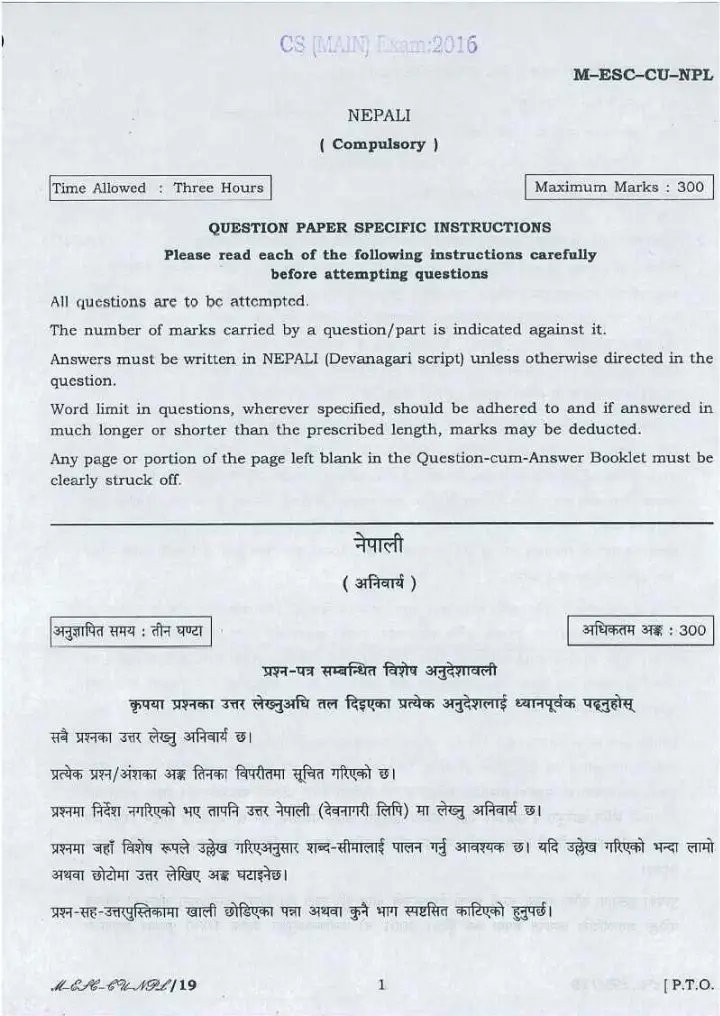
This is the question paper for the Nepali (Compulsory) subject of the UPSC Civil Services Main Examination held in 2016. The exam is conducted by the Union Public Service Commission (UPSC) and allows candidates three hours to complete the paper, which carries a maximum of 300 marks. This paper is crucial for aspirants aiming to qualify in the compulsory language paper, testing their proficiency in Nepali (Devanagari script). Understanding the structure and content of this paper is vital for effective preparation.

Major Topics Covered

  • Nepali Language
  • Essay Writing
  • Reading Comprehension
  • Social Issues
  • Culture
  • Judiciary
  • Women's Rights
  • Patriarchy
  • Food Production
  • Gender Equality

Why This Paper is Important

  • Useful for UPSC Civil Services Main Examination preparation
  • Helps understand the latest exam pattern
  • Useful for practice and self-assessment
  • Covers frequently asked General Studies topics
  • Helpful for analysing question trends

Related Resources

  • UPSC Civil Services Main Examination 2015 Nepali (Compulsory) Question Paper
  • UPSC Civil Services Main Examination 2017 Nepali (Compulsory) Question Paper
  • UPSC Civil Services Main Examination 2016 General Studies Paper I Question Paper
  • UPSC Civil Services Main Examination 2016 Essay Paper Question Paper
  • UPSC Civil Services Main Examination 2016 Nepali (Compulsory) Answer Key
  • UPSC Civil Services Main Examination Syllabus
  • UPSC Mains Compulsory Language Papers Syllabus
  • UPSC Civil Services Main Examination Pattern

Instructions

  • The number of marks carried by a question/part is indicated against it.
  • Answers must be written in NEPALI (Devanagari script) unless otherwise directed in the question.
  • Word limit in questions, wherever specified, should be adhered to and if answered in much longer or shorter than the prescribed length, marks may be deducted.
  • Any page or portion of the page left blank in the Question-cum-Answer Booklet must be clearly struck off. नेपाली (अनिवार्य) अनुज्ञापित समय : तीन घण्टा अधिकतम अङ्क : 300 प्रश्न-पत्र सम्बन्धित विशेष अनुदेशावली कृपया प्रश्नका उत्तर लेख्नुअधि तल दिइएका प्रत्येक अनुदेशलाई ध्यानपूर्वक पढ्नुहोस् सबै प्रश्नका उत्तर लेख्नु अनिवार्य छ। प्रत्येक प्रश्न/अंशका अङ्क तिनका विपरीतमा सूचित गरिएको छ। प्रश्नमा निर्देश नगरिएको भए तापनि उत्तर नेपाली (देवनागरी लिपि) मा लेख्नु अनिवार्य छ। सालाका साल प्रश्नमा जहाँ विशेष रूपले उल्लेख गरिएअनुसार शब्द-सीमालाई पालन गर्नु आवश्यक छ। यदि उल्लेख गरिएको भन्दा लामो अथवा छोटोमा उत्तर लेखिए अङ्क घटाइनेछ। 10 प्रश्न-सह-उत्तरपुस्तिकामा खाली छोडिएका पन्ना अथवा कुनै भाग स्पष्टसित काटिएको हुनुपर्छ। THE MING BIDDENE INCH A - E - E - F - N F L19 [

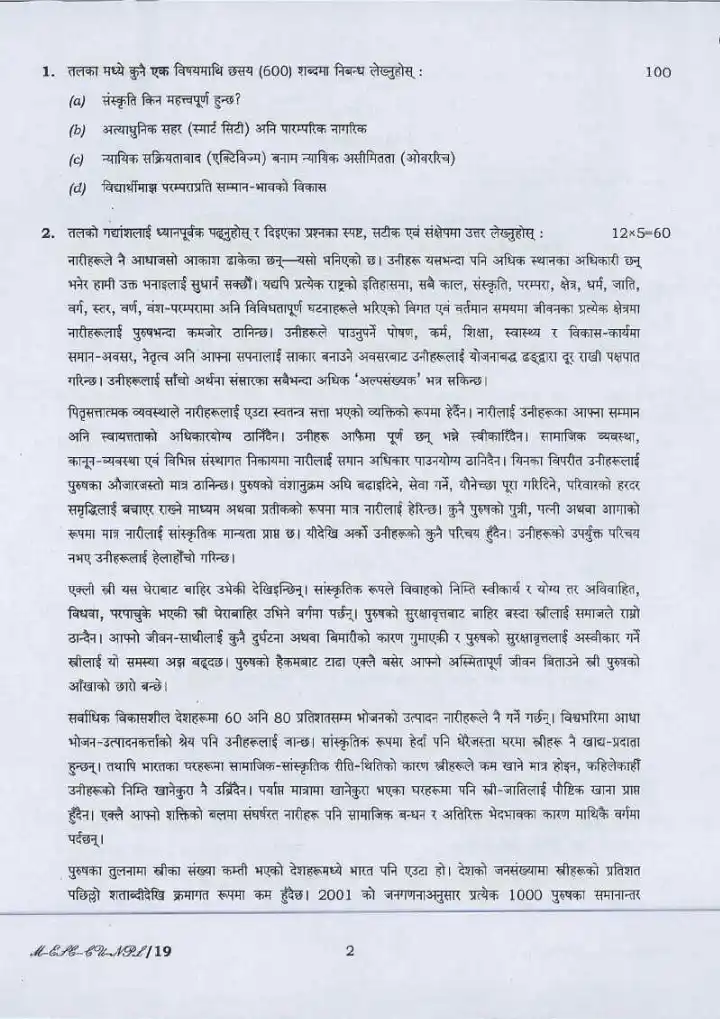
Questions (page 2)

Section A

Q1. 100 संस्कृति किन महत्त्वपूर्ण हुन्छ?

(a) अत्याधुनिक सहर (स्मार्ट सिटी) अनि पारम्परिक नागरिक

(b) न्यायिक सक्रियतावाद (एक्टिविज्म) बनाम न्यायिक असीमितता (ओवररिच)

(c) विद्यार्थीमाझ परम्पराप्रति सम्मान-भावको विकास

(d) तलको गद्यांशलाई ध्यानपूर्वक पढ्नुहोस् र दिइएका प्रश्नका स्पष्ट, सटीक एवं संक्षेपमा उत्तर लेख्नुहोस् : 12×5 = 60 2. नारीहरूले नै आधाजसो आकाश ढाकेका छन्—यसो भनिएको छ। उनीहरू यसभन्दा पनि अधिक स्थानका अधिकारी छन् भनेर हामी उक्त भनाइलाई सुधार्न सक्छौँ। यद्यपि प्रत्येक राष्ट्रको इतिहासमा, सबै काल, संस्कृति, परम्परा, क्षेत्र, धर्म, जाति, वर्ग, स्तर, वर्ण, वंश-परम्परामा अनि विविधतापूर्ण घटनाहरूले भरिएको विगत एवं वर्तमान समयमा जीवनका प्रत्येक क्षेत्रमा नारीहरूलाई पुरुषभन्दा कमजोर ठानिन्छ। उनीहरूले पाउनुपर्ने पोषण, कर्म, शिक्षा, स्वास्थ्य र विकास-कार्यमा समान-अवसर, नेतृत्व अनि आफ्ना सपनालाई साकार बनाउने अवसरबाट उनीहरूलाई योजनाबद्ध ढङ्द्वारा दूर राखी पक्षपात गरिन्छ। उनीहरूलाई साँचो अर्थमा संसारका सबैभन्दा अधिक ‘अल्पसंख्यक’ भन्न सकिन्छ। पितृसत्तात्मक व्यवस्थाले नारीहरूलाई एउटा स्वतन्त्र सत्ता भएको व्यक्तिको रूपमा हेर्दैन। नारीलाई उनीहरूका आफ्ना सम्मान अनि स्वायत्तताको अधिकारयोग्य ठानिँदैन। उनीहरू आफैमा पूर्ण छन् भन्ने स्वीकारिँदैन। सामाजिक व्यवस्था, कानून-व्यवस्था एवं विभिन्न संस्थागत निकायमा नारीलाई समान अधिकार पाउनयोग्य ठानिदैन। यिनका विपरीत उनीहरूलाई पुरुषका औजारजस्तो मात्र ठानिन्छ। पुरुषको वंशानुक्रम अधि बढाइदिने, सेवा गर्ने, यौनेच्छा पूरा गरिदिने, परिवारको हरदर समृद्धिलाई बचाएर राख्ने माध्यम अथवा प्रतीकको रूपमा मात्र नारीलाई हेरिन्छ। कुनै पुरुषको पुत्री, पत्नी अथवा आमाको रूपमा मात्र नारीलाई सांस्कृतिक मान्यता प्राप्त छ। यीदेखि अर्को उनीहरूको कुनै परिचय हुँदैन। उनीहरूको उपर्युक्त परिचय नभए उनीहरूलाई हेलाहोँचो गरिन्छ। एक्ली स्त्री यस घेराबाट बाहिर उभेकी देखिइन्छिन्। सांस्कृतिक रूपले विवाहको निम्ति स्वीकार्य र योग्य तर अविवाहित, विधवा, परपाचुके भएकी स्त्री घेराबाहिर उभिने वर्गमा पर्छन्। पुरुषको सुरक्षावृत्तबाट बाहिर बस्दा स्त्रीलाई समाजले राम्रो ठान्दैन। आफ्नो जीवन-साथीलाई कुनै दुर्घटना अथवा बिमारीको कारण गुमाएकी र पुरुषको सुरक्षावृत्तलाई अस्वीकार गर्ने स्त्रीलाई यो समस्या अझ बढ्दछ। पुरुषको हैकमबाट टाढा एक्लै बसेर आफ्नो अस्मितापूर्ण जीवन बिताउने स्त्री पुरुषको आँखाको छारो बन्छे। सर्वाधिक विकासशील देशहरूमा 60 अनि 80 प्रतिशतसम्म भोजनको उत्पादन नारीहरूले नै गर्ने गर्छन्। विश्वभरिमा आधा भोजन-उत्पादनकर्त्ताको श्रेय पनि उनीहरूलाई जान्छ। सांस्कृतिक रूपमा हेर्दा पनि धेरैजस्ता घरमा स्त्रीहरू नै खाद्य-प्रदाता हुन्छन्। तथापि भारतका घरहरूमा सामाजिक-सांस्कृतिक रीति-थितिको कारण स्त्रीहरूले कम खाने मात्र होइन, कहिलेकार्ही उनीहरूको निम्ति खानेकुरा नै उब्रिंदैन। पर्याप्त मात्रामा खानेकुरा भएका घरहरूमा पनि स्त्री-जातिलाई पौष्टिक खाना प्राप्त हुँदैन। एक्लै आफ्नो शक्तिको बलमा संघर्षरत नारीहरू पनि सामाजिक बन्धन र अतिरिक्त भेदभावका कारण माथिकै वर्गमा पर्दछन्। पुरुषका तुलनामा स्त्रीका संख्या कम्ती भएको देशहरूमध्ये भारत पनि एउटा हो। देशको जनसंख्यामा स्त्रीहरूको प्रतिशत पछिल्लो शताब्दीदेखि क्रमागत रूपमा कम हुँदैछ। 2001 को जनगणनाअनुसार प्रत्येक 1000 पुरुषका समानान्तर 2 M-ESC-CU-NPL | 19
Question paper preview

Scanned pages 1–2 for reference. Download the official PDF for the full paper.

Page 1
UPSC Civil Services Main 2016 Nepali Compulsory question paper page 1 instructions scan PDF download
Page 2
UPSC Civil Services Main 2016 Nepali Compulsory question paper page 1 instructions scan PDF download

Free question paper download

Download question paper PDF

  • 4.6 MB
  • 6 pages
  • PDF format

Frequently asked questions

What is the name of the exam?

The exam is the UPSC Civil Services Main Examination.

What year is this question paper from?

This question paper is from the year 2016.

Who conducts the Civil Services Main Examination?

The examination is conducted by the UPSC (Union Public Service Commission).

What is the subject of this question paper?

The subject is Nepali (Compulsory).

What is the maximum marks for this paper?

The maximum marks for this paper is 300.

What is the time allowed for this paper?

The time allowed for this paper is 3 hours.

← Back to Other Jobs papers