Q1.
(a) provide always deeps absoluted always they ASD 2 A 50 metre long tape has been standardised at 25°C under a pull of 100 N. During
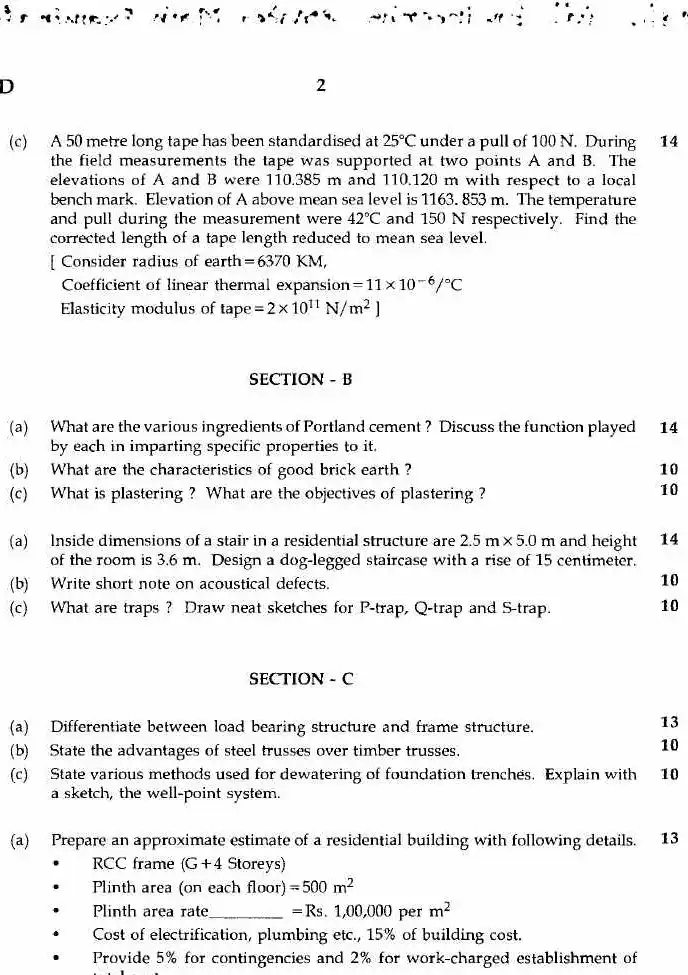
(c) 14 the field measurements the tape was supported at two points A and B. The elevations of A and B were 110.385 m and 110.120 m with respect to a local bench mark. Elevation of A above mean sea level is 1163.853 m. The temperature and pull during the measurement were 42°C and 150 N respectively. Find the corrected length of a tape length reduced to mean sea level. [ Consider radius of earth = 6370 KM, Coefficient of linear thermal expansion = 11 × 10-6/°C Elasticity modulus of tape = 2 × 10¹¹ N/m 2 ] SECTION - B
3. What are the various ingredients of Portland cement? Discuss the function played 14 by each in imparting specific properties to it.
(b) What are the characteristics of good brick earth?
(c) What is plastering ? What are the objectives of plastering ? 14 Inside dimensions of a stair in a residential structure are
Q1. (a) provide always deeps absoluted always they ASD 2 A 50 metre long tape has been standardised at 25°C under a pull of 100 N. During
(a) provide always deeps absoluted always they ASD 2 A 50 metre long tape has been standardised at 25°C under a pull of 100 N. During
(c) 14 the field measurements the tape was supported at two points A and B. The elevations of A and B were 110.385 m and 110.120 m with respect to a local bench mark. Elevation of A above mean sea level is 1163.853 m. The temperature and pull during the measurement were 42°C and 150 N respectively. Find the corrected length of a tape length reduced to mean sea level. [ Consider radius of earth = 6370 KM, Coefficient of linear thermal expansion = 11 × 10-6/°C Elasticity modulus of tape = 2 × 10¹¹ N/m 2 ] SECTION - B
3. What are the various ingredients of Portland cement? Discuss the function played 14 by each in imparting specific properties to it.
(b) What are the characteristics of good brick earth?
(c) What is plastering ? What are the objectives of plastering ? 14 Inside dimensions of a stair in a residential structure are
- (a) provide always deeps absoluted always they ASD 2 A 50 metre long tape has been standardised at 25°C under a pull of 100 N. During
- (c) 14 the field measurements the tape was supported at two points A and B. The elevations of A and B were 110.385 m and 110.120 m with respect to a local bench mark. Elevation of A above mean sea level is 1163.853 m. The temperature and pull during the measurement were 42°C and 150 N respectively. Find the corrected length of a tape length reduced to mean sea level. [ Consider radius of earth = 6370 KM, Coefficient of linear thermal expansion = 11 × 10-6/°C Elasticity modulus of tape = 2 × 10¹¹ N/m 2 ] SECTION - B
Q2.
(a) m × 5.0 m and height 4. of the room is 3.6 m. Design a dog-legged staircase with a rise of centimeter.
(b) Write short note on acoustical defects.
(c) What are traps? Draw neat sketches for P-trap, Q-trap and S-trap. SECTION - C 13
5. (a) Differentiate between load bearing structure and frame structure. State the advantages of steel trusses over timber trusses. (b)
(c) State various methods used for dewatering of foundation trenches. Explain with a sketch, the well-point system. 13
6. Prepare an approximate estimate of a residential building with following details. (a) RCC frame (G + 4 Storeys) ٠ Plinth area (on each floor) = 500 \text m2 ٠ Plinth area rate = 1/2 = Rs. 1,00,000 per m 2 Cost of electrification, plumbing etc., 15% of building cost. Provide 5% for contingencies and 2% for work-charged establishment of total cost.
Q2. (a) m × 5.0 m and height 4. of the room is 3.6 m. Design a dog-legged staircase with a rise of centimeter.
(a) m × 5.0 m and height 4. of the room is 3.6 m. Design a dog-legged staircase with a rise of centimeter.
(b) Write short note on acoustical defects.
(c) What are traps? Draw neat sketches for P-trap, Q-trap and S-trap. SECTION - C 13
5. (a) Differentiate between load bearing structure and frame structure. State the advantages of steel trusses over timber trusses. (b)
(c) State various methods used for dewatering of foundation trenches. Explain with a sketch, the well-point system. 13
6. Prepare an approximate estimate of a residential building with following details. (a) RCC frame (G + 4 Storeys) ٠ Plinth area (on each floor) = 500 \text m2 ٠ Plinth area rate = 1/2 = Rs. 1,00,000 per m 2 Cost of electrification, plumbing etc., 15% of building cost. Provide 5% for contingencies and 2% for work-charged establishment of total cost.
- (a) m × 5.0 m and height 4. of the room is 3.6 m. Design a dog-legged staircase with a rise of centimeter.
- (b) Write short note on acoustical defects.
- (c) What are traps? Draw neat sketches for P-trap, Q-trap and S-trap. SECTION - C 13
Q3. What are the various ingredients of Portland cement? Discuss the function played 14 by each in imparting specific properties to it.
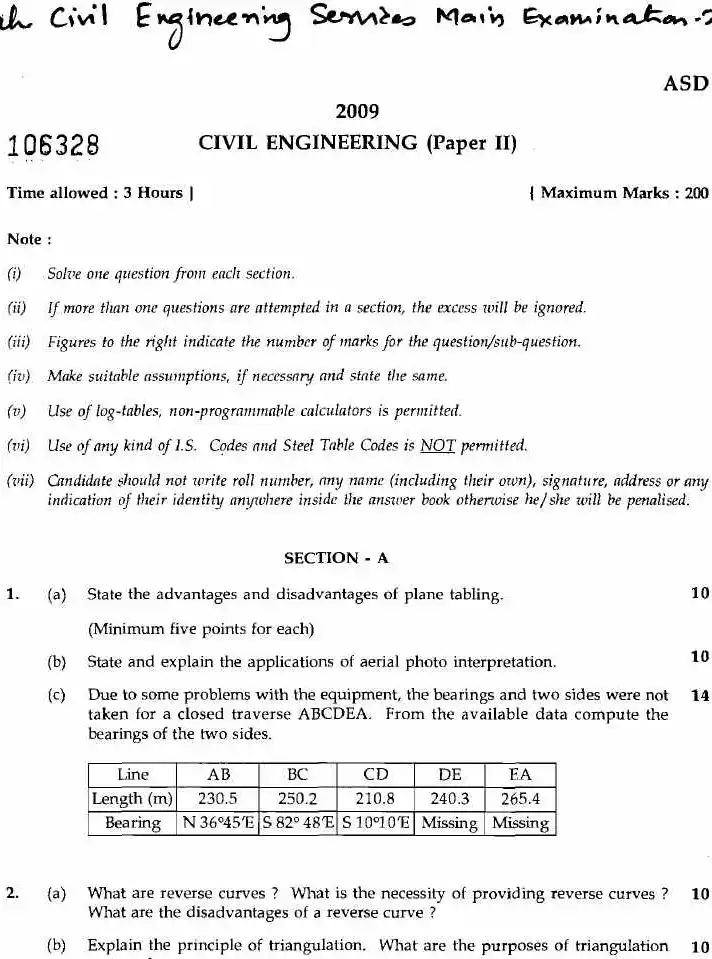
(c) Due to some problems with the equipment, the bearings and two sides were not taken for a closed traverse ABCDEA. From the available data compute the bearings of the two sides. EA Line AΒ BС CD DE 230.5 250.2 210.8 240.3 265.4 Length (m) N 36°45′E | S 82° 48′E S 10°10′E Bearing Missing Missing 14
- (b) What are the characteristics of good brick earth?
- (c) What is plastering ? What are the objectives of plastering ? 14 Inside dimensions of a stair in a residential structure are
Q4. What are reverse curves? What is the necessity of providing reverse curves? 10
Q5. (a) Differentiate between load bearing structure and frame structure. State the advantages of steel trusses over timber trusses.
(a) What are the disadvantages of a reverse curve? Explain the principle of triangulation. What are the purposes of triangulation surveys?
- (a) Differentiate between load bearing structure and frame structure. State the advantages of steel trusses over timber trusses. (b)
- (c) State various methods used for dewatering of foundation trenches. Explain with a sketch, the well-point system. 13
Q6.
(c) A 50 metre long tape has been standardised at 25°C under a pull of 100 N. During the field measurements the tape was supported at two points A and B. The elevations of A and B were 110.385 m and 110.120 m with respect to a local bench mark. Elevation of A above mean sea level is 1163.853 m. The temperature and pull during the measurement were 42°C and 150 N respectively. Find the corrected length of a tape length reduced to mean sea level. [ Consider radius of earth = 6370 KM, Coefficient of linear thermal expansion = 11 imes 10^{-6}/°C Elasticity modulus of tape = 2 imes 10^{11} N/m^2] 14
Q7.
(a) What are the various ingredients of Portland cement? Discuss the function played by each in imparting specific properties to it. 14
Q8.
(b) What are the characteristics of good brick earth?
Q9.
(c) What is plastering ? What are the objectives of plastering ?
Q10.
(a) Inside dimensions of a stair in a residential structure are 2.5 m imes 5.0 m and height of the room is 3.6 m. Design a dog-legged staircase with a rise of centimeter. 14