
Civil Judge Paper II (2019) – IPC, Evidence, CrPC & CR Act
- Year 2019
- Conducted By MPSC
Exam Details
| Detail | Information |
|---|---|
| Examination | Civil Judge Junior Division and Judicial Magistrate First Class Main Examination |
| Year | 2019 |
| Conducting Body | MPSC |
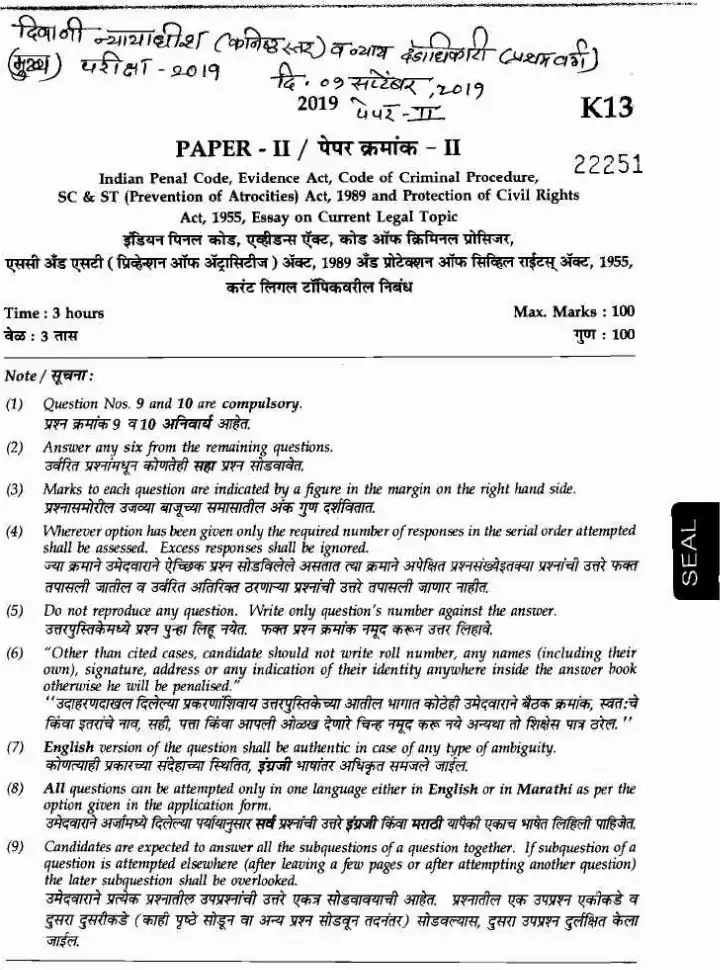
This dataset summarizes Paper II (2019) for the Civil Judge Junior Division and Judicial Magistrate First Class Main Examination. It includes the exam metadata: paper code 22251, maximum marks 100, and time 3 hours. Page 1 outlines general instructions, compulsory questions (9 and 10), and language flexibility (English/Marathi). Page 2 provides the repaired set of descriptive questions across four items. Question 1 asks about the powers to suspend, remit, and commute sentences; Question 2 centers on Theft and Robbery with multiple comparative subparts; Question 3 deals with procedure for lunatic or unsound mind accused; Question 4 covers limits of punishment for offences made of several offences, criminal breach of trust, thug, and hearsay evidence. The OCR repairs preserve bilingual prompts (English & Marathi) and ensure a structured output for SEO-ready metadata and question extraction. This previous year Civil Judge Junior Division and Judicial Magistrate First Class Main Examination question paper (2019) is useful for Judicial aspirants preparing for Maharashtra government recruitment. The paper was conducted by MPSC and reflects the official exam pattern, marking scheme and difficulty level seen in recent cycles. Use it for timed practice, topic-wise revision and understanding how questions are framed in the real examination. Download the free PDF on QuizCurrent to read instructions, attempt MCQs and compare your answers with the study notes provided on this page. Key syllabus areas include Indian Penal Code, Evidence Act, Code of Criminal Procedure, SC & ST (Prevention of Atrocities) Act, 1989, Protection of Civil Rights Act, 1955, Essay on Current Legal Topic, Power to suspend/remit/commute, Theft and Robbery. Useful for Civil Judge Junior Division and Judicial preparation. Helps understand the latest exam pattern. Useful for practice and self-assessment.
Major Topics Covered
- Indian Penal Code
- Evidence Act
- Code of Criminal Procedure
- SC & ST (Prevention of Atrocities) Act, 1989
- Protection of Civil Rights Act, 1955
- Essay on Current Legal Topic
- Power to suspend/remit/commute
- Theft and Robbery
- Criminal law comparative topics
- Lunatic or Unsound mind procedures
- Punishment limits for multiple offences
- Criminal breach of trust
- Hearsay evidence
- Thug
- Theory of criminal responsibility
- Jurisdiction and procedure
- Legal translations and interpretation
- Exam instructions and conduct
- Answer-writing discipline
- Marathi-English legal terminology
Why This Paper is Important
- Useful for Civil Judge Junior Division and Judicial preparation
- Helps understand the latest exam pattern
- Useful for practice and self-assessment
- Covers frequently asked General Studies topics
- Helpful for analysing question trends
Related Resources
Instructions
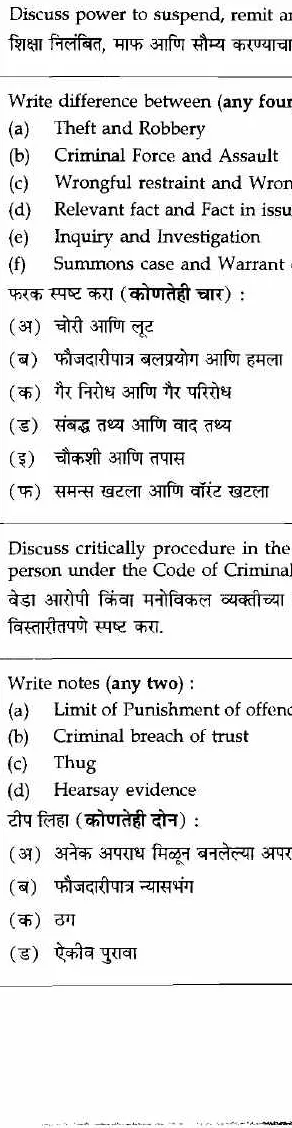
Questions (page 2)
Q2. (a) Theft and Robbery Criminal Force and Assault
(a) Theft and Robbery Criminal Force and Assault
(b) Wrongful restraint and Wrongful confinement
(c) Relevant fact and Fact in issue
(d) Inquiry and Investigation
Q3. Discuss critically procedure in the case accused being Lunatic or Unsound mind.
Q4. (a) Limit of Punishment of offence made up of several offences; Criminal breach of trust;
(a) Limit of Punishment of offence made up of several offences; Criminal breach of trust;
(b) Thug;
(c) Hearsay evidence;
(d) टीप लिहा (कोणतेही दोन): (अ) अनेक अपराध मिळून बनलेल्या अपराधाबद्दलच्या शिक्षेची मर्यादा; (ब) ठग; (ड) ऐकीव पुरावा
Question paper preview
Scanned pages 1–2 for reference. Download the official PDF for the full paper.
Free question paper download
Download question paper PDF
Your download starts in 10s
Preparing your question paper file…
Frequently asked questions
What is the maximum marks for Paper II?
100 marks.
What is the duration of Paper II?
3 hours.
Which questions are compulsory?
Questions 9 and 10 are compulsory.
From which acts are the questions drawn?
Indian Penal Code, Evidence Act, Code of Criminal Procedure, SC & ST (Prevention of Atrocities) Act, 1989 and Protection of Civil Rights Act, 1955.
In which languages can the exam be answered?
English or Marathi (one language per candidate's option).
How many questions must be attempted by candidates?
Answer any six from the remaining questions after compulsory questions.