Section A
Q1.
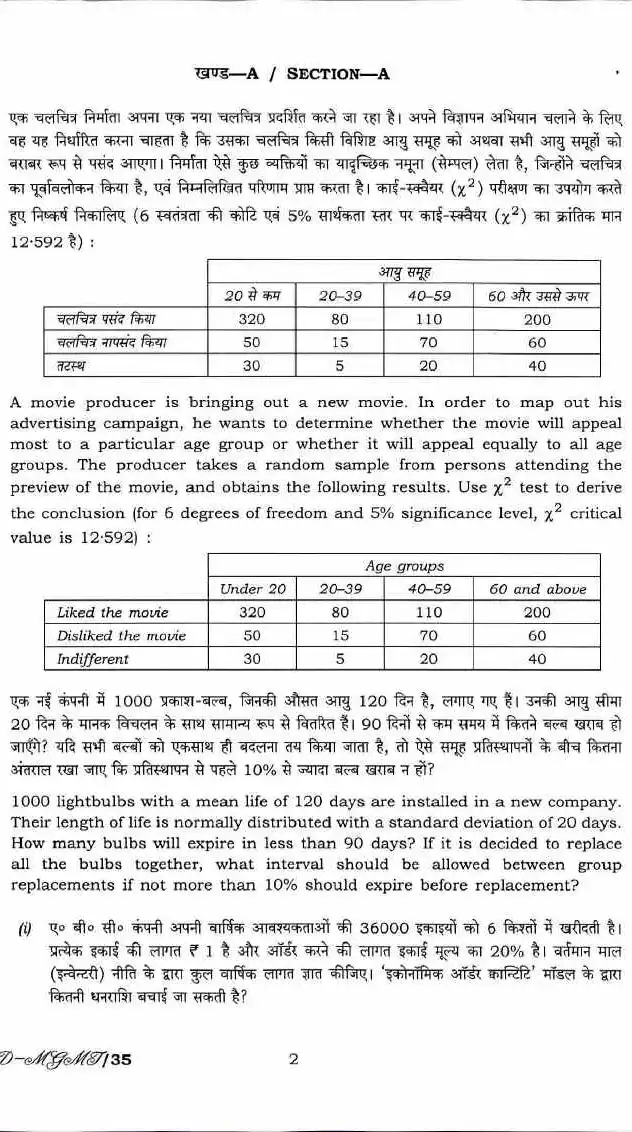
(b) एक नई कंपनी में 1000 प्रकाश-बल्ब, जिनकी औसत आयु 120 दिन है, लगाए गए हैं। उनकी आयु सीमा 20 दिन के मानक विचलन के साथ सामान्य रूप से वितरित हैं। 90 दिनों से कम समय में कितने बल्ब खराब हो जाएँगे? यदि सभी बल्बों को एकसाथ ही बदलना तय किया जाता है, तो ऐसे समूह प्रतिस्थापनों के बीच कितना अंतराल रखा जाए कि प्रतिस्थापन से पहले 10% से ज्यादा बल्ब खराब न हों?
1000 lightbulbs with a mean life of 120 days are installed in a new company. Their length of life is normally distributed with a standard deviation of 20 days. How many bulbs will expire in less than 90 days? If it is decided to replace all the bulbs together, what interval should be allowed between group replacements if not more than 10% should expire before replacement?
(c) (i) ए० बी० सी० कंपनी अपनी वार्षिक आवश्यकताओं की 36000 इकाइयों को 6 किश्तों में खरीदती है। प्रत्येक इकाई की लागत ₹ 1 है और ऑर्डर करने की लागत इकाई मूल्य का 20% है। वर्तमान माल (इन्वेन्टरी) नीति के द्वारा कुल वार्षिक लागत ज्ञात कीजिए। ‘इकोनॉमिक ऑर्डर कान्टिटि’ मॉडल के द्वारा कितनी धनराशि बचाई जा सकती है?
(i) ABC Company purchases its annual requirement of 36000 units in 6 instalments. The cost of each unit is ₹ 1 and the ordering cost is 20% of the unit cost. Find the total annual cost under the present inventory policy. How much money can be saved by the ‘Economic Order Quantity’ model?