JPSC Geologist Recruitment Exam 2013 Geology Question Paper PDF
- Year 2013
- Conducted By JPSC
- Maximum Marks 200
- Duration 2 Hours
- Languages English
Exam Details
| Detail | Information |
|---|---|
| Examination | GEOLOGIST RECRUITMENT EXAM |
| Year | 2013 |
| Conducting Body | JPSC |
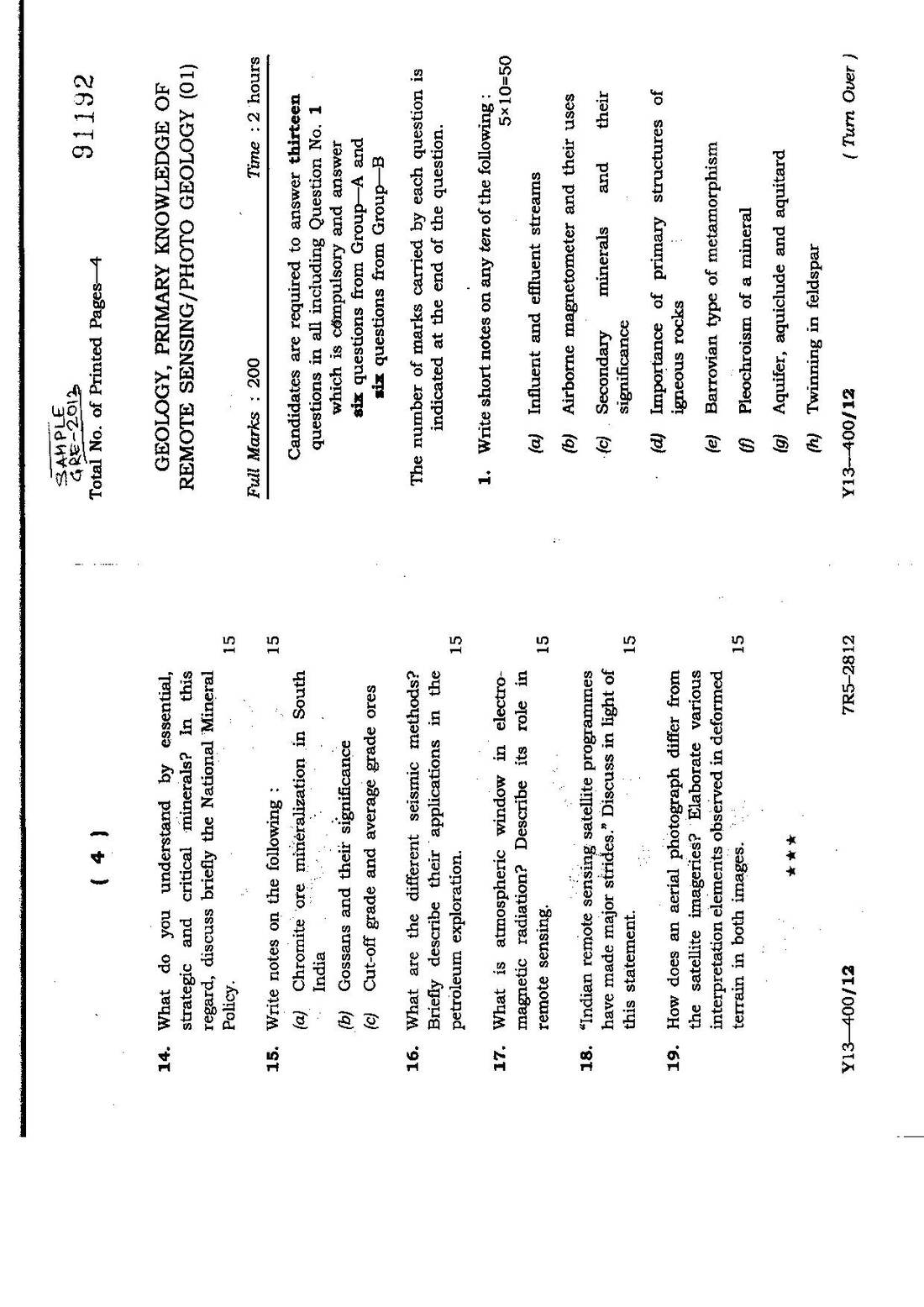
| Paper | Geology, Primary Knowledge of Remote Sensing-Photo Geology |
| Subject | Geology, Remote Sensing, Photo Geology |
| Duration | 2 Hours |
| Maximum Marks | 200 |
| Question Type | Mixed |
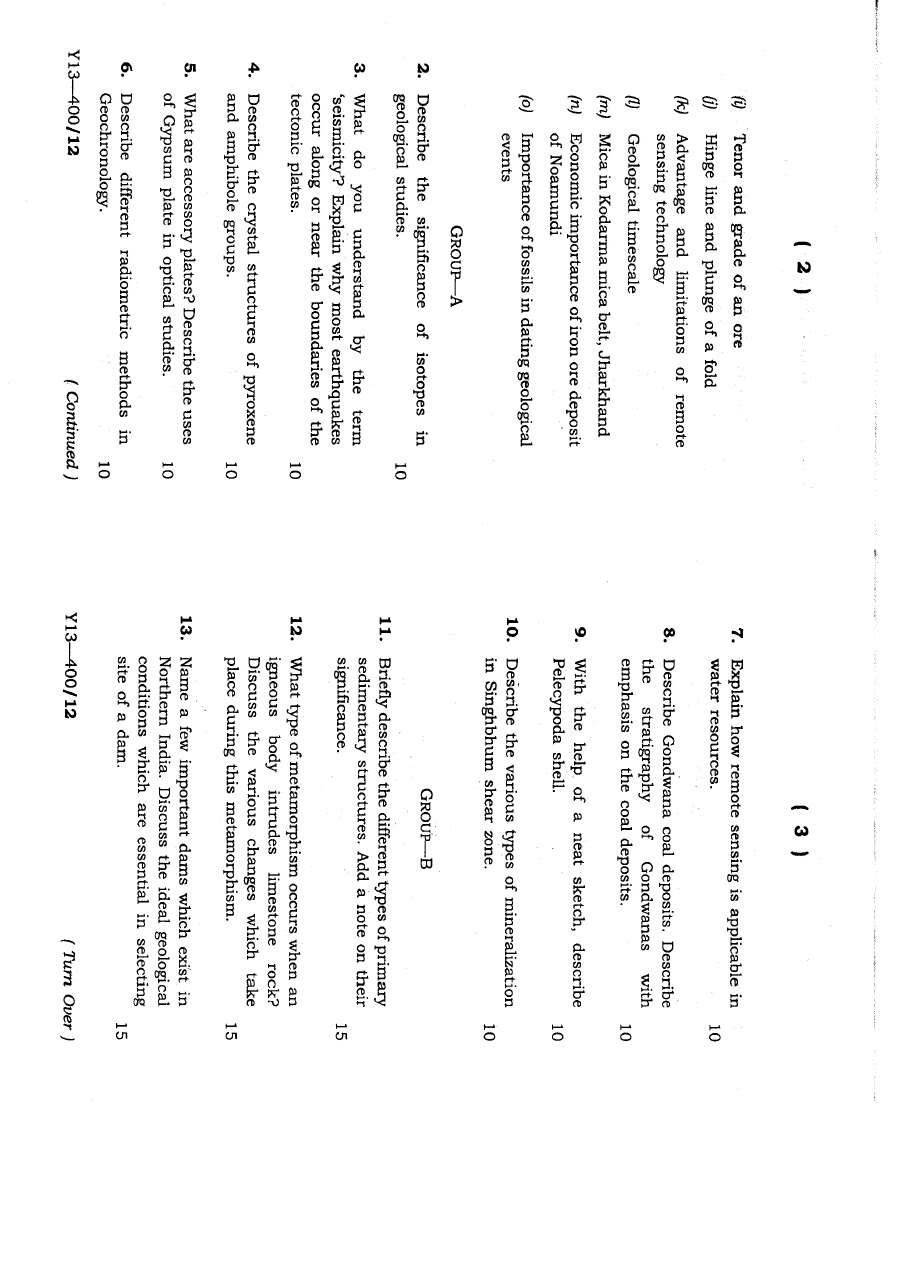
This document contains the question paper for the JPSC Geologist Recruitment Exam held in 2013. The paper, designated as '01', focuses on 'Geology, Primary Knowledge of Remote Sensing-Photo Geology'. It is designed for a duration of 2 hours and carries a maximum of 200 marks. The exam requires candidates to answer a total of thirteen questions, including compulsory question number 1, with specific allocations from Group-A and Group-B, indicating a mixed format of objective and descriptive questions. This paper is crucial for aspirants preparing for geological recruitment examinations conducted by JPSC, offering insights into the exam pattern and subject coverage.
Major Topics Covered
- Geology
- Remote Sensing
- Photo Geology
- Airborne Magnetometer
- Barrovian type of metamorphism
- Aquifer, aquiclude, aquitard
- Influent and effluent streams
- Pleochroism of a mineral
- Primary minerals
- Twinning in feldspar
- Igneous rocks
- Indian remote sensing satellite programmes
- Aerial photograph interpretation
- Satellite imageries interpretation
- Seismic methods
- National Mineral Policy
- Chromite ore mineralization
- Atmospheric window in electromagnetic radiation
- Critical minerals
- Petroleum exploration
- Strategic minerals
- Gypsum plate
- Accessory plates
- Amphibole groups
- Pyroxene groups
- Radiometric methods
- Tectonic plates
- Seismicity
- Earthquakes
- Igneous body
- Limestone rock
- Dam site selection
- Sedimentary structures
- Metamorphism
- Fossils
- Geological timescale
- Iron ore deposit
- Gondwana coal deposits
- Pelecypoda
- Mineralization
- Water resources
- Fold
- Hinge line
- Plunge
Why This Paper is Important
- Useful for GEOLOGIST RECRUITMENT EXAM preparation
- Helps understand the latest exam pattern
- Useful for practice and self-assessment
- Covers frequently asked General Studies topics
- Helpful for analysing question trends
Related Resources
- JPSC Geologist Recruitment Exam 2014 Paper 01
- JPSC Geologist Recruitment Exam 2012 Paper 01
- UPSC Geologist Exam Previous Year Papers
- State PSC Geology Officer Previous Papers
- JPSC Geologist Recruitment Exam 2013 Answer Key
- Geology Remote Sensing Answer Key 2013
- JPSC Geologist Syllabus
- Geology Syllabus for Competitive Exams
Instructions
- 91 \frac{3}{18} \mathbf{9} 14. \frac{15}{11}
Questions (page 2)
Q7. Explain how remote sensing is applicable in Pelecypoda emphasis Describe Gondwana coal deposits.
(1) neat
(2) sketch,
(3) describe
(4) shell.
Q9. With the œ.
Q10. Describe the various types of mineralization
Q11. Briefly describe the different types of primary Name a few important dams which exist in What type igneous body intrudes limestone rock?
(1) (Turn
(2) Over)
(3)
ب
آ
(4)
г
Сп
Question paper preview
Scanned pages 1–2 for reference. Download the official PDF for the full paper.
Free question paper download
Download question paper PDF
Your download starts in 10s
Preparing your question paper file…
Frequently asked questions
What is the name of the exam?
The exam is the GEOLOGIST RECRUITMENT EXAM.
Which conducting body organized this exam?
The exam was conducted by JPSC.
What is the year of this question paper?
The question paper is from the year 2013.
What is the paper code and name?
The paper code is '01' and the name is 'Geology, Primary Knowledge of Remote Sensing-Photo Geology'.
What is the total duration allowed for the exam?
The time allowed for the exam is 2 hours.
What are the maximum marks for this paper?
The maximum marks for this paper are 200.