Q1.
(a)
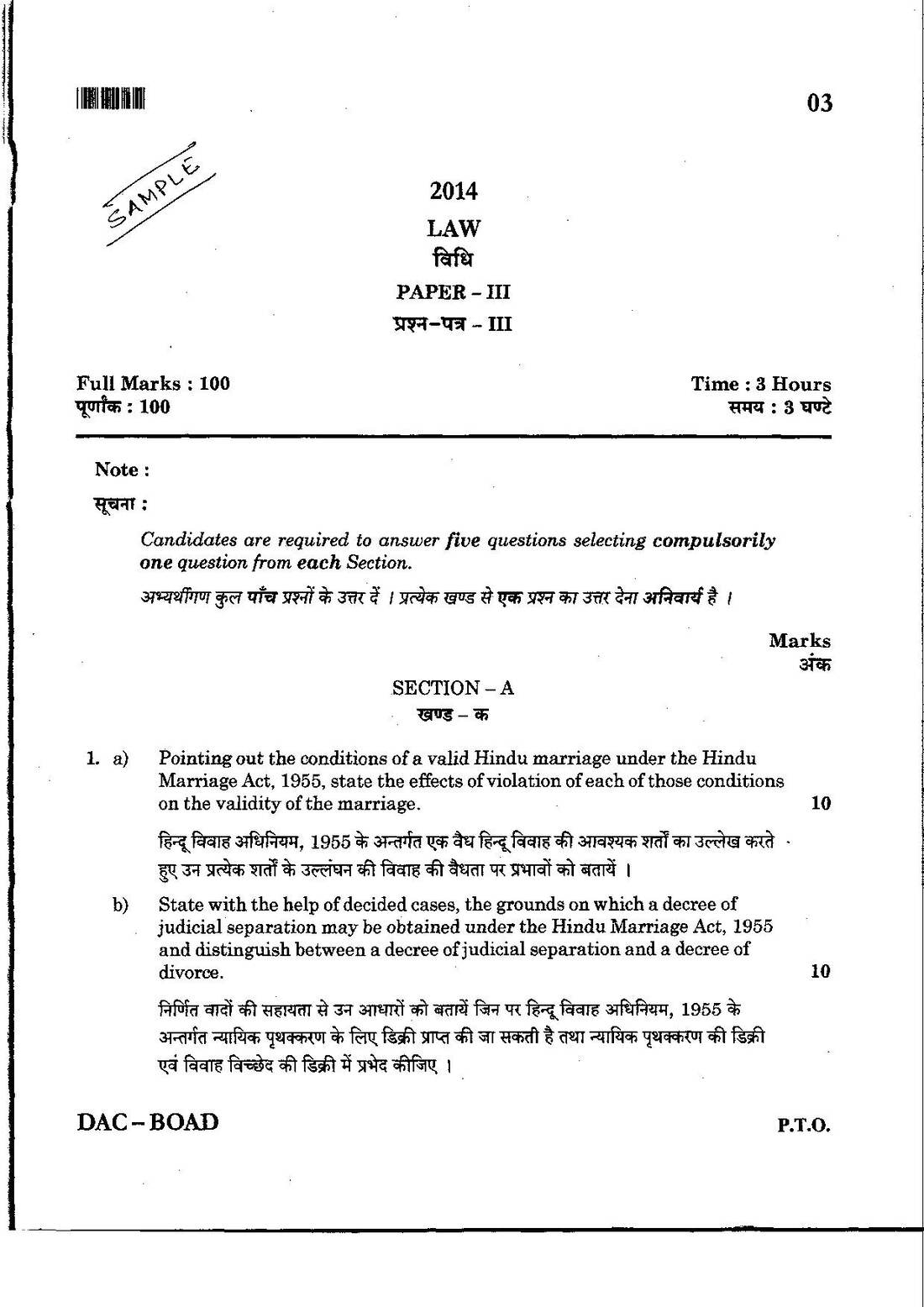
a) Pointing out the conditions of a valid Hindu marriage under the Hindu Marriage Act, 1955, state the effects of violation of each of those conditions on the validity of the marriage.
10
हिन्दू विवाह अधिनियम, 1955 के अन्तर्गत एक वैध हिन्दू विवाह की आवश्यक शर्तों का उल्लेख करते हुए उन प्रत्येक शर्तों के उल्लंघन की विवाह की वैधता पर प्रभावों को बतायें ।
(b)
हिन्दू विवाह अधिनियम, 1955 के अन्तर्गत एक वैध हिन्दू विवाह की आवश्यक शर्तों का उल्लेख करते हुए उन प्रत्येक शर्तों के उल्लंघन की विवाह की वैधता पर प्रभावों को बतायें ।
Q2.
(a)
b) State with the help of decided cases, the grounds on which a decree of judicial separation may be obtained under the Hindu Marriage Act, 1955 and distinguish between a decree of judicial separation and a decree of divorce.
10
निर्णित वादों की सहायता से उन आधारों को बतायें जिन पर हिन्दू विवाह अधिनियम, 1955 के अन्तर्गत न्यायिक पृथक्करण के लिए डिक्री प्राप्त की जा सकती है तथा न्यायिक पृथक्करण की डिक्री एवं विवाह विच्छेद की डिक्री में प्रभेद कीजिए ।
(b)
निर्णित वादों की सहायता से उन आधारों को बतायें जिन पर हिन्दू विवाह अधिनियम, 1955 के अन्तर्गत न्यायिक पृथक्करण के लिए डिक्री प्राप्त की जा सकती है तथा न्यायिक पृथक्करण की डिक्री एवं विवाह विच्छेद की डिक्री में प्रभेद कीजिए ।
Q3.
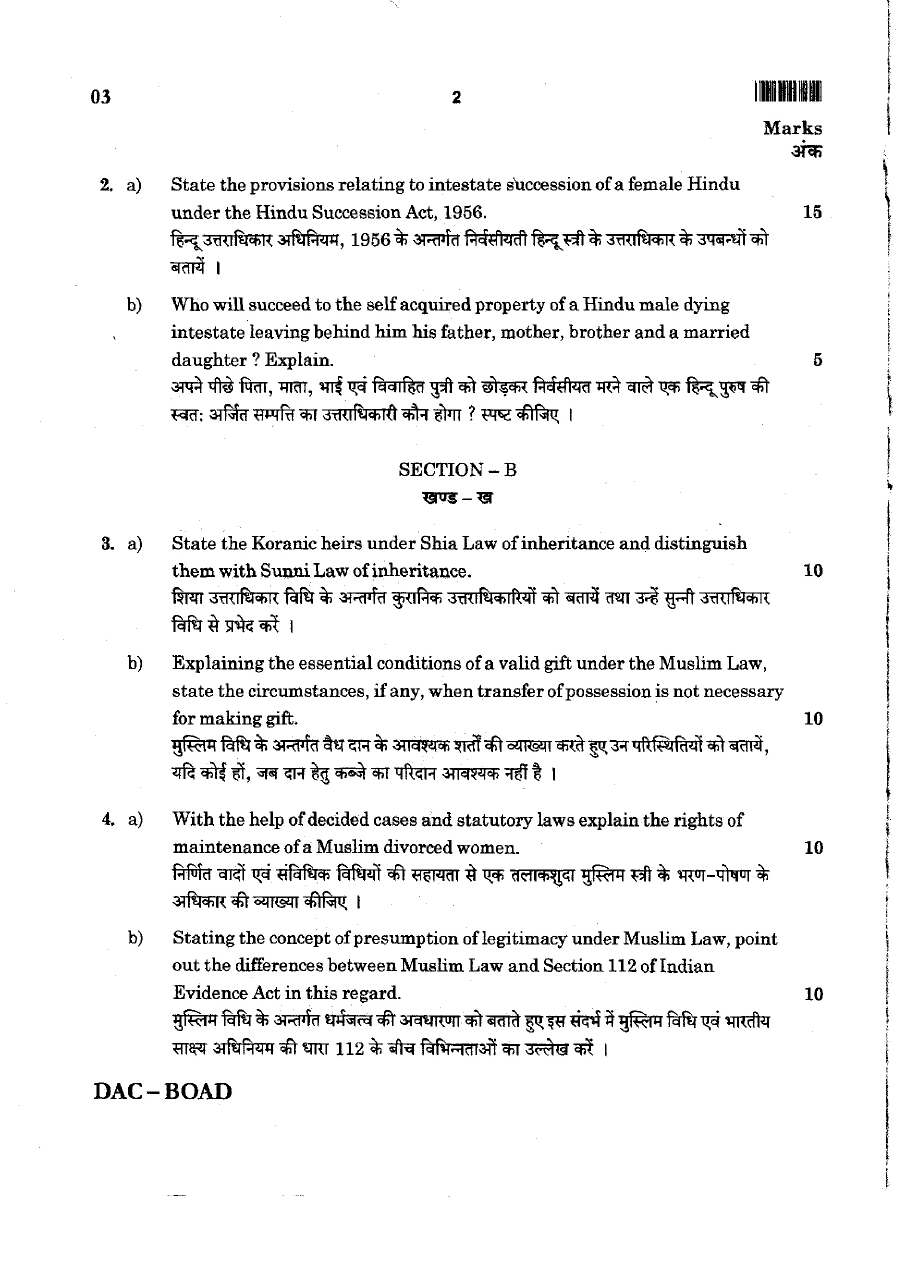
(a) a) State the provisions relating to intestate succession of a female Hindu under the Hindu Succession Act, 1956.
15
हिन्दू उत्तराधिकार अधिनियम, 1956 के अन्तर्गत निर्वसीयती हिन्दू स्त्री के उत्तराधिकार के उपबन्धों को बतायें ।
(a)
a) State the provisions relating to intestate succession of a female Hindu under the Hindu Succession Act, 1956.
15
हिन्दू उत्तराधिकार अधिनियम, 1956 के अन्तर्गत निर्वसीयती हिन्दू स्त्री के उत्तराधिकार के उपबन्धों को बतायें ।
(b)
हिन्दू उत्तराधिकार अधिनियम, 1956 के अन्तर्गत निर्वसीयती हिन्दू स्त्री के उत्तराधिकार के उपबन्धों को बतायें ।
-
(a)
a) State the provisions relating to intestate succession of a female Hindu under the Hindu Succession Act, 1956.
15
हिन्दू उत्तराधिकार अधिनियम, 1956 के अन्तर्गत निर्वसीयती हिन्दू स्त्री के उत्तराधिकार के उपबन्धों को बतायें ।
-
(b)
हिन्दू उत्तराधिकार अधिनियम, 1956 के अन्तर्गत निर्वसीयती हिन्दू स्त्री के उत्तराधिकार के उपबन्धों को बतायें ।
Q4.
(a)
b) Who will succeed to the self acquired property of a Hindu male dying intestate leaving behind him his father, mother, brother and a married daughter ? Explain.
5
अपने पीछे पिता, माता, भाई एवं विवाहित पुत्री को छोड़कर निर्वसीयत मरने वाले एक हिन्दू पुरुष की स्वत: अर्जित सम्पत्ति का उत्तराधिकारी कौन होगा ? स्पष्ट कीजिए ।
(b)
अपने पीछे पिता, माता, भाई एवं विवाहित पुत्री को छोड़कर निर्वसीयत मरने वाले एक हिन्दू पुरुष की स्वत: अर्जित सम्पत्ति का उत्तराधिकारी कौन होगा ? स्पष्ट कीजिए ।
Q5.
(a) a) State the Koranic heirs under Shia Law of inheritance and distinguish them with Sunni Law of inheritance.
10
शिया उत्तराधिकार विधि के अन्तर्गत कुरानिक उत्तराधिकारियों को बतायें तथा उन्हें सुन्नी उत्तराधिकार विधि से प्रभेद करें ।
(a)
a) State the Koranic heirs under Shia Law of inheritance and distinguish them with Sunni Law of inheritance.
10
शिया उत्तराधिकार विधि के अन्तर्गत कुरानिक उत्तराधिकारियों को बतायें तथा उन्हें सुन्नी उत्तराधिकार विधि से प्रभेद करें ।
(b)
शिया उत्तराधिकार विधि के अन्तर्गत कुरानिक उत्तराधिकारियों को बतायें तथा उन्हें सुन्नी उत्तराधिकार विधि से प्रभेद करें ।
-
(a)
a) State the Koranic heirs under Shia Law of inheritance and distinguish them with Sunni Law of inheritance.
10
शिया उत्तराधिकार विधि के अन्तर्गत कुरानिक उत्तराधिकारियों को बतायें तथा उन्हें सुन्नी उत्तराधिकार विधि से प्रभेद करें ।
-
(b)
शिया उत्तराधिकार विधि के अन्तर्गत कुरानिक उत्तराधिकारियों को बतायें तथा उन्हें सुन्नी उत्तराधिकार विधि से प्रभेद करें ।
Q6.
(a)
b) Explaining the essential conditions of a valid gift under the Muslim Law, state the circumstances, if any, when transfer of possession is not necessary for making gift.
10
मुस्लिम विधि के अन्तर्गत वैध दान के आवश्यक शर्तों की व्याख्या करते हुए उन परिस्थितियों को बतायें, यदि कोई हों, जब दान हेतु कब्जे का परिदान आवश्यक नहीं है ।
(b)
मुस्लिम विधि के अन्तर्गत वैध दान के आवश्यक शर्तों की व्याख्या करते हुए उन परिस्थितियों को बतायें, यदि कोई हों, जब दान हेतु कब्जे का परिदान आवश्यक नहीं है ।
Q7.
(a) a) With the help of decided cases and statutory laws explain the rights of maintenance of a Muslim divorced women.
10
निर्णित वादों एवं संविधिक विधियों की सहायता से एक तलाकशुदा मुस्लिम स्त्री के भरण-पोषण के अधिकार की व्याख्या कीजिए ।
(a)
a) With the help of decided cases and statutory laws explain the rights of maintenance of a Muslim divorced women.
10
निर्णित वादों एवं संविधिक विधियों की सहायता से एक तलाकशुदा मुस्लिम स्त्री के भरण-पोषण के अधिकार की व्याख्या कीजिए ।
(b)
निर्णित वादों एवं संविधिक विधियों की सहायता से एक तलाकशुदा मुस्लिम स्त्री के भरण-पोषण के अधिकार की व्याख्या कीजिए ।
-
(a)
a) With the help of decided cases and statutory laws explain the rights of maintenance of a Muslim divorced women.
10
निर्णित वादों एवं संविधिक विधियों की सहायता से एक तलाकशुदा मुस्लिम स्त्री के भरण-पोषण के अधिकार की व्याख्या कीजिए ।
-
(b)
निर्णित वादों एवं संविधिक विधियों की सहायता से एक तलाकशुदा मुस्लिम स्त्री के भरण-पोषण के अधिकार की व्याख्या कीजिए ।
Q8.
(a)
b) Stating the concept of presumption of legitimacy under Muslim Law, point out the differences between Muslim Law and Section 112 of Indian Evidence Act in this regard.
10
मुस्लिम विधि के अन्तर्गत धर्मजत्व की अवधारणा को बताते हुए इस संदर्भ में मुस्लिम विधि एवं भारतीय साक्ष्य अधिनियम की धारा 112 के बीच विभिन्नताओं का उल्लेख करें ।
(b)
मुस्लिम विधि के अन्तर्गत धर्मजत्व की अवधारणा को बताते हुए इस संदर्भ में मुस्लिम विधि एवं भारतीय साक्ष्य अधिनियम की धारा 112 के बीच विभिन्नताओं का उल्लेख करें ।